
Fluxx
Playdek, Inc.Board
3.7227.00 Reviews
- Version
- 2.1.9
- Installs
- 100.00K
- Age Rating
- Everyone
Screenshots



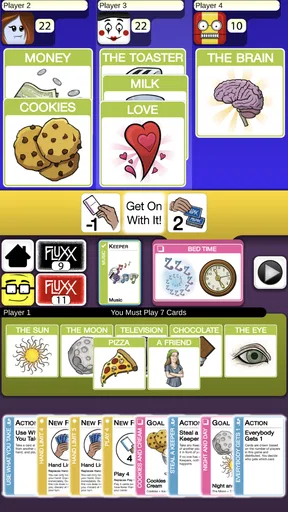



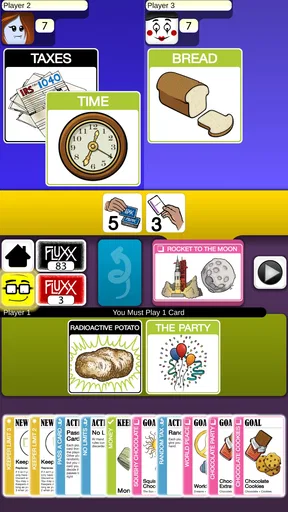
Our Review of Fluxx
 Analysis by Appyee
Fluxx is the kind of board game I open when I want a card game that refuses to settle into a predictable routine. One moment I am trying to build a simple plan, and the next the rules have changed, the winning condition has moved, or another player has quietly turned my careful setup against me. That instability is the central appeal, but it is also the reason this will not suit everyone.
Developed by Playdek, Inc., this free board game for Android feels designed for short bursts of playful disorder rather than long, serious strategy sessions. It is aimed at Everyone, runs on devices using Android 6.0 or later, and includes optional in-app purchases ranging from $0.99 to $2.99 per item. I found the basic idea easy to understand, but getting comfortable with the constant rule changes takes more patience than the simple presentation initially suggests.
My first impression: simple cards, deliberately unstable plans
The first thing that stands out is how quickly Fluxx gets to its central joke: the rules are not fixed. In a conventional card game, I learn the structure and gradually improve by making better decisions within it. Here, the structure itself can change during play. The number of cards I draw, the number I play, the conditions for victory, and the restrictions around the table may all be affected by what appears next.
That creates an unusual first impression. The game looks approachable because its basic actions are represented by cards, yet a new player can still feel lost if several rule changes arrive close together. I recommend treating the opening games as practice rather than as tests of skill. The useful question is not “What is my long-term strategy?” but “Which rule matters most right now, and what can I safely do before the table changes again?”
In my experience, that shift in thinking is essential. Fluxx rewards attention more than memorized openings. A plan that was excellent a moment ago may now be irrelevant, and clinging to it wastes turns. I started enjoying the game more when I stopped trying to control every outcome and instead looked for the strongest move available under the current rules.
The free entry point also makes it easy to try without committing to a purchase. The game has an average rating of 3.7 from around 893 ratings, which suggests a mixed but meaningful response rather than universal approval. I can understand that split: players who enjoy surprises will appreciate the constant motion, while anyone seeking a stable, carefully balanced board-game puzzle may find the same feature irritating.
There is also a practical question about who should play it. Fluxx works best with people willing to read cards carefully, accept sudden reversals, and laugh when a promising position disappears. It is less suitable for a quiet solo-style experience built around perfect planning, or for a group that becomes frustrated whenever luck interrupts a well-developed strategy.
Why the opening matters more than it seems
The early turns are not merely a warm-up. They teach me what kind of table I am sitting at. If players immediately use every disruptive option, the session becomes fast and chaotic. If everyone saves useful cards, the game can develop into a slower contest of timing. I pay attention to that rhythm before spending cards that could protect a future plan.
A useful habit is to identify the current goal before evaluating the cards in my hand. New players often collect attractive-looking cards without checking whether they help with the active victory condition. That is a costly mistake in Fluxx because the goal can change before the collection becomes useful. I get better results by asking whether a card advances the current objective, protects me from an obvious threat, or gives me flexibility after the next rule change.
Another small but important tip is to avoid assuming that having more cards is automatically safer. A larger hand can offer options, but it may also become a liability when a rule forces players to discard or limits what they can keep. I try to maintain useful variety instead of simply accumulating everything available.
The game’s visual language: playful disorder without losing the table
Fluxx communicates its identity through a light, card-focused presentation. The setting is not built around a large explorable world or a detailed story campaign. Instead, the “world” exists in the relationship between the cards, their illustrations, and the changing objectives they introduce. That makes the visual direction serve the mechanics directly: the cards are the characters, the setting, and the source of conflict at the same time.
I like that this approach keeps the screen focused on the playable situation. There is no need to search through a complicated board to understand what matters. The current rules and goals are the visual center of the experience, so the atmosphere comes from watching the table transform. A modest position can suddenly look dangerous when a new condition appears, and a crowded board can become meaningless when the objective shifts.
The art direction supports a mood of friendly chaos rather than menace. That distinction matters. Even when another player benefits from a rule that ruins my plan, the presentation encourages me to see the reversal as part of the game’s personality. The tone is closer to a lively gathering around a table than to a solemn strategy duel.
At the same time, the card-centered design places a responsibility on clarity. When several rules and goals are active, I need to read the screen rather than rely only on the artwork. This is not a game I can play well by glancing at colors or icons alone. The visual style makes the experience approachable, but the changing text still demands concentration.
That balance is one of the more interesting aspects of Fluxx. The game looks casual enough for a quick session, yet the visual information can become dense when the table accumulates effects. I would not call it visually overwhelming, but I do think the best experience comes from playing on a screen where card text is comfortable to read. On a smaller display, the act of checking every active rule can interrupt the flow.
How the setting changes from turn to turn
Because the game does not depend on a fixed narrative setting, its atmosphere is created procedurally by the cards in play. One session can feel like a race toward a reachable objective; another can become a defensive struggle in which everyone waits for a chance to change the conditions. The same basic deck structure can produce very different emotional beats.
This is also why I would not recommend approaching Fluxx as a game with a single ideal mood. It can be relaxed when players accept the randomness, tense when a goal is nearly completed, or noisy when several rule changes arrive in succession. The art gives those moments a consistent playful frame, while the mechanics decide whether the table feels calm or frantic.
For a real everyday scenario, I can see it working well during a casual evening when friends have different levels of board-game experience. The basic actions are easier to explain than a large strategy game, and experienced players do not automatically receive a fixed advantage because the rules keep moving. However, I would explain beforehand that the game’s unpredictability is not a side effect; it is the main design choice. That expectation prevents a lot of disappointment.
Sound and rhythm: the mood lives in the interruptions
Fluxx’s strongest sense of rhythm comes from its turns and interruptions rather than from a dramatic soundtrack or a story sequence. The pace changes whenever a new rule alters how many cards can be drawn or played, or when a goal suddenly makes one player’s hand much more valuable. I notice the game most when that rhythm accelerates: players stop planning several turns ahead and begin reacting to the immediate table state.
That pacing is effective because it matches the game’s identity. A stable, elaborate audio presentation would feel out of place beside mechanics built around surprise. The experience works better as a compact digital tabletop session in which the important sound is the sense of actions resolving and plans being disrupted.
Still, the rhythm can be uneven. A session may move quickly when everyone understands the active rules, then slow down while players reread the current conditions and compare them with their hands. This is not necessarily a flaw, but it means Fluxx does not deliver constant momentum. The pauses are part of the decision-making, especially for new players, yet they can make a casual match feel less immediate than expected.
I find the best pacing comes from a group that reads its options before the turn begins. If every player waits until the exact moment they can act to study all active rules, the game becomes stop-start. A simple table habit helps: keep track of the current goal and the most important rule while other players act. That reduces the amount of rechecking and makes the sudden changes feel exciting instead of confusing.
The game’s sound and presentation also support short sessions better than extended ones. Since the core pleasure comes from watching the rules mutate, repeated rounds can lose some of their surprise if the same players are already tired. I prefer using it as a flexible part of an evening, perhaps between more demanding games, rather than expecting it to carry an entire long event.
When the rhythm works, and when it breaks
The pacing works particularly well with players who enjoy quick reactions and table talk. A new goal can make everyone reassess their priorities, and the resulting discussion gives the session a social pulse. It is satisfying when I recognize that another player is one move away from success and use a carefully timed card to change the situation.
The rhythm breaks down when players expect every decision to be equally controllable. Fluxx includes choices, but it does not promise that careful play will always overcome an unlucky draw or an unexpected rule change. If I want a game where planning several rounds ahead is the main source of satisfaction, I would choose a more traditional strategy board game instead.
That comparison is important. Compared with a fixed-rule card game, Fluxx offers more variety from one session to the next but less stability for long-term planning. Compared with a deep digital board game, it is easier to start and less demanding to manage, but it does not provide the same sense of mastery through a carefully developed system. Its ideal space is between party-game unpredictability and light strategic decision-making.
Mechanical fit: why the chaos still has decisions inside it
The mechanics fit the theme because the game’s instability is not decorative. Rule changes directly affect what I can do, what other players can do, and what counts as success. That makes every new card potentially meaningful. I am not simply collecting points on a fixed track; I am constantly checking whether the current structure favors my hand or creates an opening for someone else.
The most useful mental model is to think in layers. First, I check the active rules because they determine the shape of the turn. Next, I check the current goal because it tells me what matters. Finally, I examine my hand for cards that improve my position without making me vulnerable to the next change. This order is more reliable than reading the hand first and trying to force it into the situation.
One non-obvious trade-off is that disruptive cards are valuable even when they do not help me immediately. Changing the conditions can be a defensive move if another player is close to winning. However, using disruption too early may remove an advantage I could have exploited later. I try to distinguish between a genuine emergency and the temptation to play a dramatic card simply because it looks powerful.
Another useful insight is that the active goal can change the value of cards already on the table. A card that seemed harmless may suddenly become central, while a card I spent several turns protecting may no longer matter. This prevents the game from becoming a simple race to build a permanent engine. I need to keep reassessing rather than becoming emotionally attached to a particular collection.
That flexibility is also the game’s main weakness for players who prefer transparent skill expression. A strong decision can be undone by a later draw, and a weak position can improve unexpectedly. I do not see this as unfair within Fluxx’s intended style, but I would not use it to teach someone who wants a clean introduction to strategic card-game fundamentals.
Practical advice for a smoother session
I recommend explaining the changing-rule concept before the first game and encouraging everyone to read active cards aloud when they change. This takes a little extra time, but it prevents the most common source of friction: one player acting under an outdated rule while everyone else has already adjusted.
It also helps to separate “what I want” from “what is currently possible.” I may want to pursue a particular goal, but if the table changes the draw or play rules, that plan may no longer be sensible. I get more enjoyment by treating each turn as a small puzzle with temporary conditions rather than as one chapter in a fixed strategy.
For experienced players, the deeper challenge is timing. Holding a flexible card can be better than immediately improving the board, especially when the current goal is unstable. For beginners, the opposite may be true: playing a clear, useful card helps them understand the flow. I would not force advanced restraint too early, because the game becomes easier to appreciate after the basic cycle feels natural.
The current version is 2.1.9, and the game has passed the 100K+ installs mark. Those details do not change how the mechanics work, but they make Fluxx feel like an established digital option rather than an obscure experiment. I would still judge it primarily on whether its rule-changing style matches the player, because popularity cannot remove the central trade-off between surprise and control.
The optional purchases are another point to consider. Since the game is free to start, I can test the core experience before spending anything. I would advise doing exactly that. If I enjoy the shifting objectives and reactive turns, optional content may feel worthwhile; if the basic unpredictability already bothers me, paying for more of the same style is unlikely to solve the problem.
Who should play it, and who should choose something else?
Fluxx is a good fit for friends who enjoy conversation, reversals, and games where a clever last-minute change can matter more than a perfect opening. It is also useful for families or mixed-experience groups because the rules are introduced through play rather than through a large initial rulebook. The Everyone rating reflects its accessible tone, although younger or less experienced players may still need help tracking multiple active conditions.
I would recommend it to someone who says, “I want a board game that is different every time.” That promise is reflected in the way the goals and rules interact, not just in a collection of cosmetic themes. Even when the basic turn structure feels familiar, the reason for taking a turn keeps changing.
I would steer away from it if you dislike luck affecting a competitive result, if you need a fixed plan to remain valid, or if you want a richly narrated world. Fluxx creates atmosphere through its card interactions rather than through character development or exploration. Players looking for a campaign, a detailed setting, or a highly deterministic puzzle will probably be happier with another board-game app.
It is also not my first choice for a group that wants a very fast party game with almost no reading. The actions are approachable, but the changing rules and goals require attention. A lighter alternative may be better when the group is talking over the game, playing in a noisy environment, or including people who do not want to monitor a shifting set of instructions.
My atmosphere verdict: a playful table that never stays still
What makes Fluxx memorable is the way its presentation and mechanics point in the same direction. The card-focused art keeps the experience friendly and readable, the setting is created by the changing objectives, and the rhythm comes from sudden interruptions to everyone’s plans. Nothing feels detached from the central idea that the game should remain unstable.
That coherence does not make every session smooth. The same rule changes that create variety can produce confusion, pauses, and victories that feel more fortunate than earned. I have to accept that trade-off before I can enjoy the game properly. Once I do, the disorder becomes less frustrating and more like the reason to keep playing another round.
My final recommendation is cautious but positive. Try the free version if you want a chaotic card game with a social, constantly shifting mood, and give it enough time for the changing-rule structure to make sense. Keep the active goal visible in your thinking, read new rules carefully, and resist spending every disruptive card immediately. Those small habits make a noticeable difference.
Fluxx is not the best choice for disciplined, long-range strategy, but it succeeds at making a familiar card table feel unpredictable. I would recommend it to players who value surprise, flexible decisions, and playful reversals more than complete control. If that sounds like your kind of evening, this is an easy game to try; if you want every victory to come from a plan you could explain several turns in advance, look elsewhere.
Verdict
Strengths of Fluxx
- Fast, intuitive interface for browsing and managing content.
- Supports creative workflows with flexible customization options.
- Useful tools are easy to access without a steep learning curve.
- Regular updates can improve performance and add helpful features.
- Works well for users who want a focused, distraction-free experience.
Limitations of Fluxx
- Some advanced features may require a paid plan or extra purchases.
- Performance can vary on older devices or weaker connections.
- The interface may feel unfamiliar until you learn the main controls.
- Limited offline functionality can be inconvenient while traveling.
- Notifications may become distracting if not adjusted in the settings.
Other Releases by Playdek, Inc.
View All
Ascension: Deckbuilding Game
Card3.7

D&D Lords of Waterdeep
Board3.8
Similar Picks in This Category
View All
Ludo King®
Gametion4.1

Ludo
Yarsa Games4.6

Tile Master® - Matching Game
Higgs Studio3.6

Checkers Online
CC Games4.6

Dominoes
Loop Games4.7

Chess
Chess Prince4.6
Frequently Asked Questions
What is Fluxx and how does the game work?
Fluxx is a fast-changing card game in which the rules, the number of cards players draw, and the number of cards they may play can change during the match. Players usually begin with a simple rule set, then introduce new rules, goals, and actions. Because the winning condition can change unexpectedly, every round feels different and requires players to adapt rather than follow one fixed strategy.
Can Fluxx be played offline or without creating an account?
The availability of offline play and account-free access may depend on the version of Fluxx you download and the platform it runs on. Before installing, check the app listing for details about internet requirements, guest play, and login options. If the digital version supports offline matches, it can be useful for travel, while online features may require a connection and additional permissions.
Does Fluxx support multiplayer games?
Fluxx is designed around multiplayer card-game interaction, so its digital version may offer several ways to play, such as matches against computer-controlled opponents, local play, or online multiplayer. The exact options can vary between editions and updates. Review the current store description before downloading if playing with friends is important, especially regarding private rooms, matchmaking, and the number of supported players.
Is Fluxx suitable for children and beginners?
Fluxx is generally easy to start because the opening rules are simple, but the changing goals and special cards can become confusing during the first few games. It is usually a good choice for families and casual players who enjoy unpredictable gameplay. Younger children may need help reading cards and understanding rule changes, while experienced players will quickly appreciate its tactical surprises.
Are there in-app purchases, advertisements, or privacy concerns in Fluxx?
The commercial model can differ depending on the Fluxx edition, developer, and operating system. Some versions may be paid upfront, while others can include advertising, optional purchases, downloadable content, or online services. Before downloading, examine the official app-store listing for pricing, permissions, data collection information, and the developer’s privacy policy so you know what to expect.
Play our best games!


